


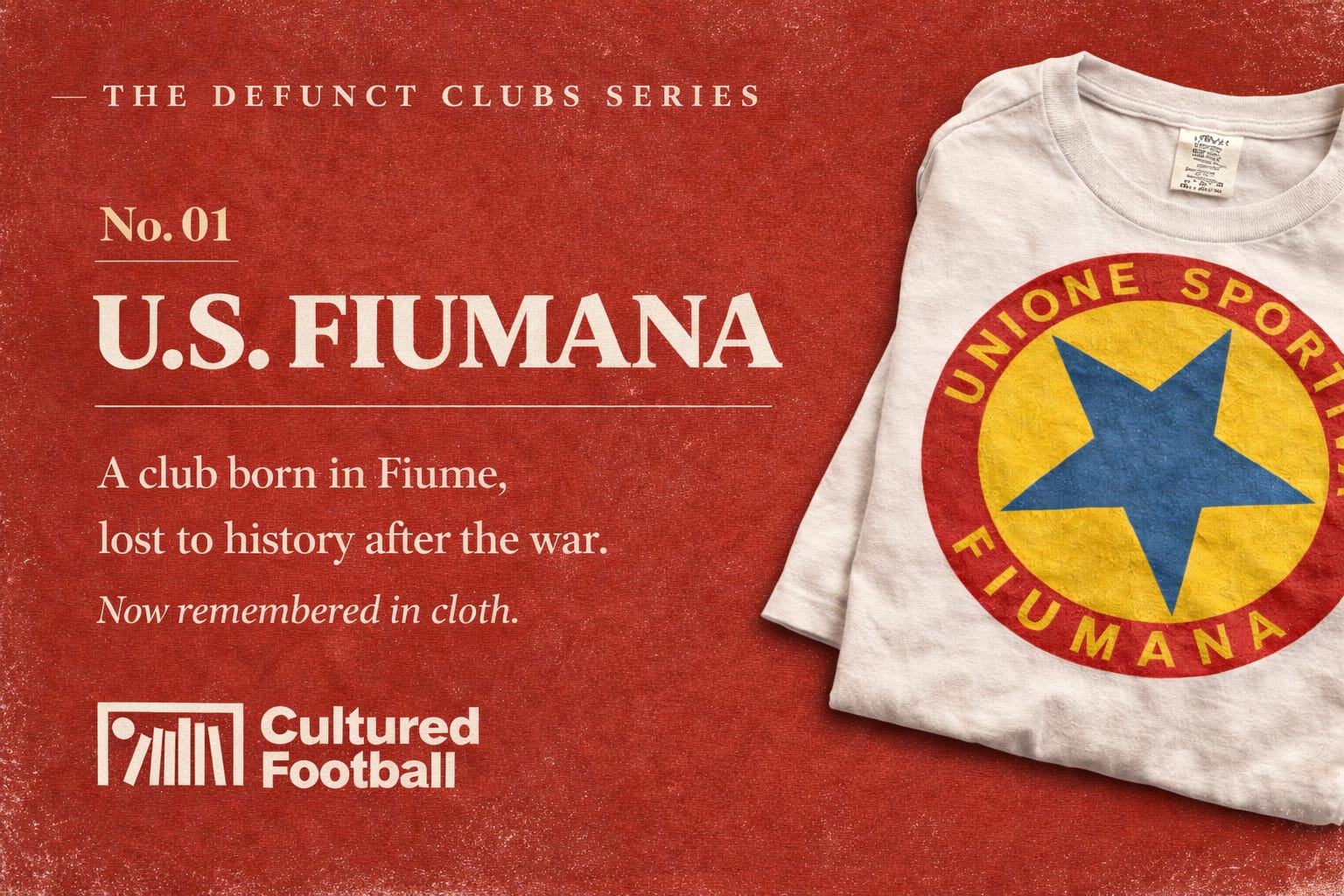
In the aftermath of the First World War, the city of Fiume’s passage to Italy emerged from the instability that followed the collapse of Austria-Hungary, which left it suspended between competing national claims.
Both Italy and the newly formed Kingdom of Serbs, Croats and Slovenes saw it as their own, turning the port into one of the Adriatic’s most symbolic disputes. In September 1919 the poet-soldier Gabriele D’Annunzio marched in with a band of volunteers and proclaimed the Italian Regency of Carnaro, an audacious, short-lived experiment in nationalist politics and spectacle.
A year later D’Annunzio was expelled from the city by Italian troops leading to the creation of the internationally recognised Free State of Fiume, a fragile compromise that survived only a few years.
Political instability, a coup, and the rise of Mussolini in Italy paved the way for the Treaty of Rome of 27 January 1924, which dissolved the Free State: the city was annexed to Italy, while Sušak passed to Yugoslavia, fixing a border that reflected the tensions of the age.
By the time of D’Annunzio proclamation, football had already formed deep roots in the city. Club Sportivo Olimpia had been founded in 1904 with its football section beginning official activity on 25 November 1906.
In 1917, Club Sportivo Gloria was founded as a workers’ club of the city. The two sides quickly became the main rivals in local championships, representing respectively the wealthier and the more popular classes of Fiume.
All this changed in 1926 when both teams were compelled to join forces to form Unione Sportiva Fiumana.
The origins of the merger, as with many others that took place around the same time, were rooted in the deep crisis that shook the FIGC in the spring of that year, a moment the fascist regime used to reshape Italian football along new political and organisational lines.
The Viareggio Charter of 2 August that year created the Divisione Nazionale, the direct forerunner of Serie A, and promoted a model based on stronger, unified urban clubs. Internal rivalries were seen as wasteful and socially divisive; in their place the regime ‘encouraged’ mergers that would mirror its ideal of collective discipline.
In a border city such as Fiume, where questions of identity were already politically charged, the policy was applied with particular speed.
There was, however, also a clear sporting logic. By bringing together the two strongest local sides, the city aimed to present a single, competitive representative capable of holding its own at national level, especially after the construction of a new stadium gave Fiume a stage worthy of higher ambitions.
That stadium, opened in 1925 in the Borgomarina district, had been carved dramatically out of the mountainside. Known in the Italian years as the Stadio Comunale del Littorio and today as Kantrida, it became the physical and symbolic home of the new entity.
The club’s identity drew consciously on the recent past: its cardinal red, blue and yellow colours echoed the tricolour of the former Free State of Fiume. On the pitch this translated into cardinal red shirts, blue shorts and blue socks trimmed with maroon and yellow.
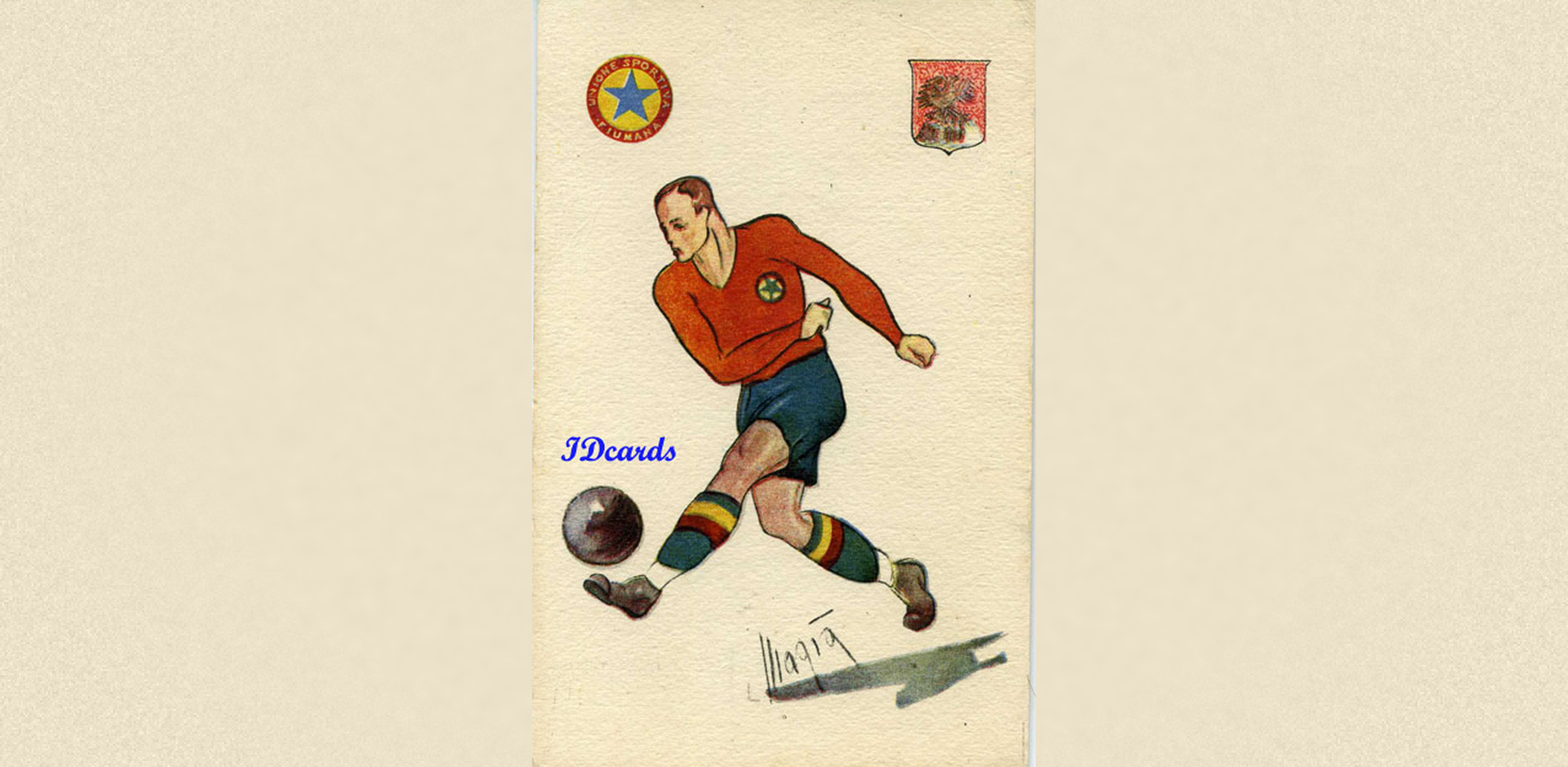
The team began its life in the interregional Prima Divisione, then the second tier of Italian football, carrying with it both the weight of political design and the more familiar, universal hope that unity might bring sporting strength.
On the field the new club grew into its role with a mixture of steady progress and abrupt turns that mirrored the volatility of the era. In its first championship, 1926–27, Fiumana finished fifth in Group B of the Prima Divisione, a respectable placing that suggested consolidation rather than immediate prominence. The following season brought a sharper rise: third place out of ten and, above all, victory in the Coppa Federale, the first tangible silverware for the unified side and a sign that the project carried real competitive weight.
Its entry into the expanded Divisione Nazionale in 1928–29 came not only through sporting merit but through politics. Initially excluded, Fiumana was admitted at the last moment to replace the vacancy created by the enforced merger of Inter and US Milanese, part of a broader strategy to strengthen the presence of clubs from the “redeemed lands” on the national stage.
Yet the step up proved too demanding. A fourteenth-place finish consigned the team to relegation to the newly formed Serie B, and a year later, after finishing bottom, it slipped back into the interregional world.
It was in this third tier that Fiumana spent most of the 1930s, first the Prima Divisione, then, from 1935, Serie C. There was to be on final ascent, however, as the Serie C title of 1940–41 returned the club to Serie B, only for survival to be missed by two points the following year, behind Savona.
War, however, was already closing in.
The 1942–43 Serie C campaign, which saw US Fiumana finish in an honourable third place, became the last Italian championship the club would play.
In the spring of 1943 Fiumana dissolved, its story ending quietly after a 4–1 victory over Vittorio Veneto on 14 March.
The war brought to an end not only a championship but an entire civic and cultural framework. After the Italian armistice of September 1943, Fiume passed under German occupation, becoming part of the collapsing architecture of the Axis frontier. The change was abrupt and heavy with uncertainty, and when Tito’s Yugoslav army entered the city in May 1945 it marked the definitive end of Italian rule and of the world in which Fiumana had been created.
The political settlement followed soon after. The Treaty of Paris in 1947 formally transferred Fiume and the whole of Istria from Italy to the Socialist Federal Republic of Yugoslavia, turning a military reality into an internationally recognised border. What had been a contested Adriatic city for decades now began a new life under a different name, Rijeka, and within a different state.
The transition was not merely administrative but reshaped the human geography of the city. Between twenty and thirty-eight thousand Italians - from a city that had previously contained around sixty thousand souls - left in the years that followed, part of the wider Istrian exodus that emptied the city.
In 1948 the former Yugoslav suburb of Sušak was formally merged with Rijeka, completing a process that created a single, unified city out of what had long been divided space. What emerged was not simply a renamed Fiume, but a new place, carrying within it the layered memory of the one that had disappeared.
Football still managed to survive. In 1946 the local Trade Union Representative Team looked to take part in the new Yugoslav championship that was due to begin the following autumn despite the city of Fiume designation as a military occupation zone.
Participation in the competition could only be achieved with a name and a legal identity that would be acceptable to the new authorities; continuing with the US Fiumana was not an option.
The solution was to found a new club, Società Cultura Fisica Quarnero a deliberately neutral title that, soon afterwards, was joined by its Croatian form, Kvarner, making the institution officially bilingual.
In substance, it was a continuation. The founding members, players and directors of Fiumana passed almost entirely into the new entity.
That fragile balance between languages and identities lasted less than a decade. In 1954, at a moment of heightened tension between Italy and Yugoslavia, the Titoist authorities abolished the city’s bilingual status. The club was compelled to follow suit, dropping the dual name and becoming simply Rijeka; a final, symbolic step in the long transition from the world in which Fiumana had once played.
And yet, the story of US Fiumana still echoes on. HNK Rijeka, the club that replaced it and changed the kit to an all white one, would go on to win Rijeka two Croatian First Football League titles, two Yugoslav Cups and seven Croatian Cups. Its official year of foundation, however, remains 1904, a quiet but telling acknowledgement that the teams which represented the city in different states, languages and championships all belong to the same unbroken narrative.
Honours Won:
Coppa Federale Winners: 1927–28
Serie C Winners: 1940–41
Serie C Second place: 1942–43 (Group A)
Prima Divisione Second place: 1934–35 (Group A)
Each week on Cultured Football we pick the five great football stories from the previous seven days.
Lovely project. Looking for the next one.
Really enjoyed this Paul. An absolutely brilliant read, looking forward to reading more in this series!