


Contrary to public perception, Belgium is not short of cities worth a visit. Indeed, there are plenty which offer a delightful mix of medieval squares, Gothic cathedrals, picturesque canals and, naturally, very good beer. Trips to Bruges, Ghent and Dinant, for instance, tend to make up some of Europe’s most enjoyable city breaks.
Enticing visitors to Beringen is, however, a bit trickier. The city has its own attractions but these are topped by a mining museum and a former spoil tip, both a direct result of Beringen being primarily a mining town for much of the twentieth century. They’re interesting enough for the right audience, but not the kind that many are willing to visit.
Still, it is unescapable that coal has shaped Beringen. It and the surrounding area had been largely rural before coal was discovered beneath Limburg towards the end of the nineteenth century. From that point, everything began to change. Mines opened, creating jobs and a need for workers who arrived from all over Belgium and beyond.
As happened elsewhere, this sudden boom resulted in a need for better, or at least bigger, infrastructure. Houses were built along with schools, shops and anything else needed by a rapidly growing community.
Naturally enough, that also meant recreational facilities.
In the early 1920s, the management of the Beringen mine began offering tennis for engineers and other senior employees. For the miners, the popular choice was football.
This led to the formation of Cercle Sportif Kleine Heide on the fourth of December 1924 with mining engineer Eduard Frenay elected as chairman and backed financially by the NV Kolenmijnen van Beringen (Beringen Coal Mines).
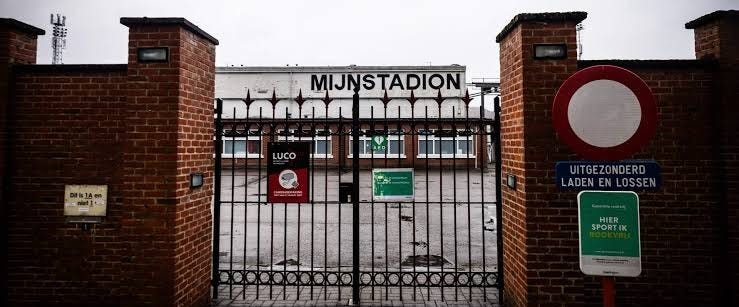
Quickly renamed as Beringen Football Club, the new side adopted red and black as its colours, a nod to the red handkerchiefs worn by miners to wipe away coal and dust from their faces. Their games were played, aptly enough, at the Mijnstadion - literally the Mine Stadium - which stood opposite the enormous Beringen colliery.
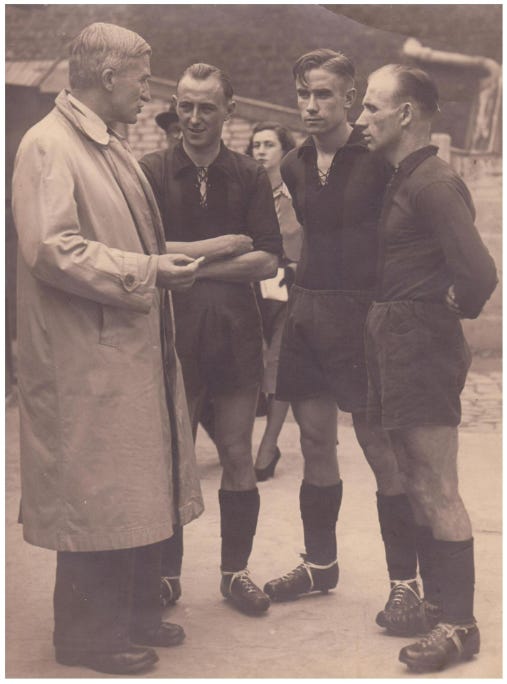
At first this was just a mere field with markings of a football pitch, but it gradually developed into a proper stadium. A monumental entrance was added in 1930 and, after the Second World War, this was followed by a grandstand and main building designed by architect René Van Steenbergen.
The football club playing inside it was developing too.
Beringen first reached the national divisions in the 1930s and continued climbing after the war. In 1950 the side won promotion to the Division d’Honneur, becoming the first club from the Limburg region to reach the highest level of Belgian football.
The city’s delight was short lived. Beringen were immediately relegated and spent much of the following decade moving between Belgium’s top two divisions. Another promotion in 1952 was again followed by relegation a year later. They returned in 1955, went down in 1957, came back in 1958 and were relegated once again two years after that.
A liftploeg – the Flemish term for yo-you club - if there ever was one.
Whilst the club fluctuated between divisions, there was still talent at Beringen. Michel Bensch, himself a miner, scored heavily regardless of which division the club played and even won three caps for his country. In another era, it is difficult to imagine a player with that record not being picked up by one of Belgium’s bigger clubs. Instead, Bensch’s eleven-year career was all spent with his hometown club.
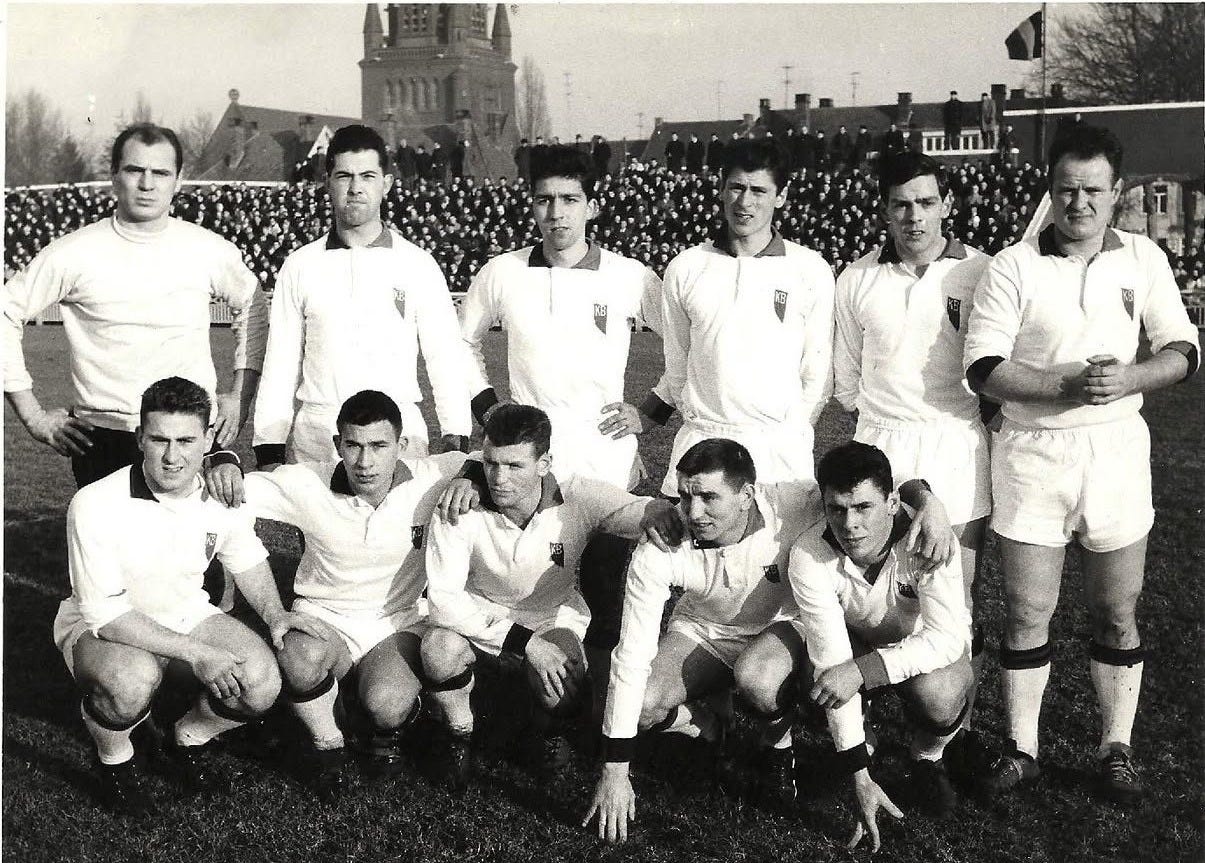
As time passed, Beringen started to make more of that talent. In 1962, they returned to the topflight once again and this time they had some staying power. Tuur Ceuleers had been brought in as trainer that year and was allowed to build the team. A legendary striker during his playing career – he is still fourth in the list of all time goal scorers of the Belgian topflight – Ceuleers began to put together a team that combined grit with talent.
Each week on Cultured Football we pick the five great football stories from the previous seven days.
Like any good story, this one begins somewhere unexpected: not on a football pitch,
It says a lot about the side that perhaps the most notable duo - Alfons Peeters, a defender and Armand Peeters, a striker - were renown more because they were twins than for any special talent. For sure, they were all very good footballers but this wasn’t a side built around stars.
Roger De Condé, Frans Gebruers and Julien Pooters formed a solid defence. Wim Mertens had to provide the attacking spark, with Cyriel Van Herle alongside him to offer greater physical presence. Van Herle was known for his extremely powerful shot that could easily decide a game. Also, up front there was Staf Kauwenberghs, a technically strong striker who added guile to others’ grit.
Tellingly, a number of those players still worked in the mine during the week before putting on the Beringen kit at the weekend.
Their first season back was hardly spectacular, ending with a thirteenth-place finish. Yet the following campaign would become the greatest in the club’s history.
Belgian football in the early 1960s was increasingly dominated by Anderlecht and Standard Liège. The Brussels club had already won nine league championships whilst the team from Liège had won three of the previous six titles.
Beringen had no right to challenge either. Nevertheless, as the 1963-64 season progressed, the miners’ club kept winning. Boosted by their formidable attack, they collected 41 points from their 30 matches, winning 16 of them and losing only five.
Only Anderlecht proved better, finishing four points ahead of them.
For a club that had spent much of the previous decade struggling simply to remain in the division, it was an extraordinary achievement. Crowds of around 15,000 were regularly filling the Mijnstadion as the town watched its team challenge the country’s traditional powers.
Yet even as Beringen were enjoying the greatest season in their history, events away from the pitch were about to take an extraordinary turn.
On 1 March 1964, Beringen faced Turnhout, a club fighting to avoid relegation. In the days before the game, two Turnhout officials, including chairman Jan Verbeek, allegedly used former Diest player Vic Verdonck as an intermediary to offer Beringen goalkeeper Frans Gebruers 40,000 Belgian francs to influence the result. Beringen captain Felix Geybels was also implicated.
Gebruers apparently had second thoughts before the match, fearing that Beringen’s directors had discovered what was happening. His suspicions were justified. On 9 March, the club wrote to the Belgian FA reporting the attempted bribery, prompting an investigation that uncovered the scheme.
The consequences were severe. Turnhout were relegated, with Berchem Sport spared in their place, while Verbeek, Verdonck, Gebruers and Geybels were initially banned for life. Incidentally, the initial result - a 2-0 win for Turnout - was reversed with Beringen handed a 5-0 victory, a result that catapulted them in second place ahead of Standard Liege.
Even so, for Beringen, it cast an unfortunate shadow over what should have been remembered simply as the greatest league season in the club’s history.
That controversy killed any momentum that Beringen had been building, not to mention that it deprived them of two key players. They would never get that close again.
The following season Beringen slipped to eighth and from there settled into a rather less glamorous existence in the lower half of the table. Eventually, in 1970, the familiar journey back to the second division returned.
Again, it did not last long.
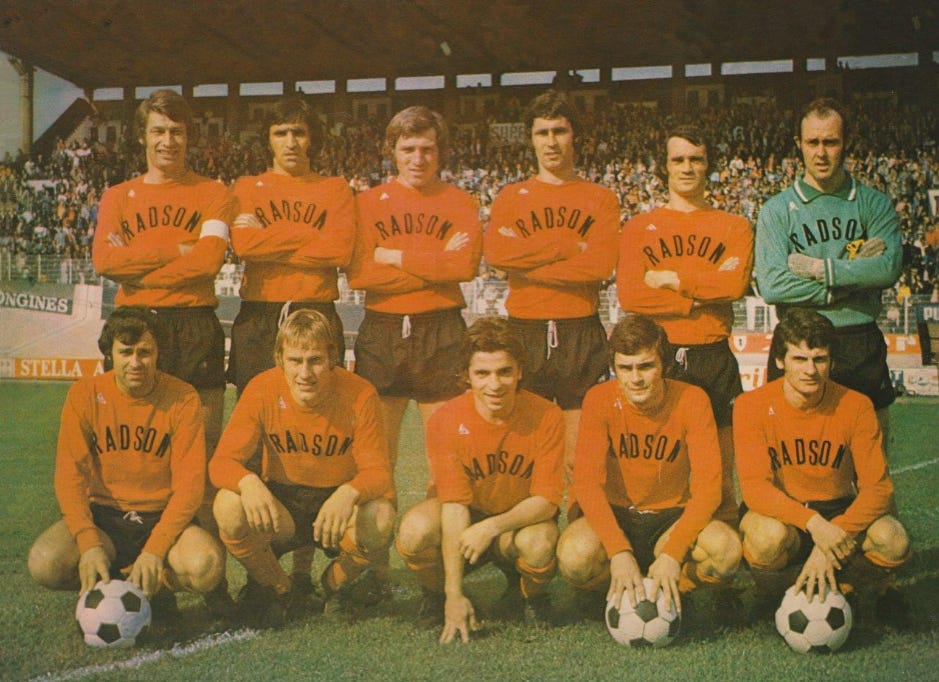
Promotion in 1972 lead to another lengthy period among the elite and, for the next decade, Beringen became a fixture in the Belgian top-flight once more. There were no more title challenges, but some notable footballers passed through the Mijnstadion. Belgian internationals Wilfried Van Moer and Julien Cools both played for the club, while Dutch coach Kees Rijvers also spent time in charge
Survival occasionally required a little assistance.
Beringen finished in the relegation places in 1976 but remained in the division after La Louvière were punished over a corruption case. Five years later it happened again. Beringen once more finished in a relegation spot, only for Beerschot to be sanctioned and sent down instead.
Twice the trapdoor had opened beneath them but on both occasions someone else had fallen through.
Eventually, however, there was no reprieve. Beringen were relegated in 1982, immediately won promotion back to the first division and then finished bottom in 1983-84.
This time the decline proved to be more permanent, and they would never play top-flight football again. By 1988 Beringen had fallen into the third tier; eight years later they dropped into the fourth.
What happened to the football club cannot be separated entirely from what was happening outside the Mijnstadion. Belgium’s coal industry had been contracting for decades and the Limburg mines that had once provided employment for tens of thousands of people were approaching their end.
One after another they closed.
On 28 October 1989, the Beringen mine produced coal for the final time. The industry around which the town had developed was gone.
Beringen FC survived it, but only just.
The club continued playing in the lower divisions throughout the 1990s, a long way removed from the days when they were among the country’s best. Financial problems mounted and in 2002, they were forced into a merger with Vigor Beringen, the city’s smaller second outfit, even if it had actually been founded first, in 1913.
The two joined together to form KVK Beringen. Officially, however, it was Vigor that survived the merger, with the new club taking its place.
Echoes of the club that had come so close to becoming Belgian champions survived in the new entity, and supporters continue to keep its history alive. Yet for all that continuity, the truth remains that, after 78 years, Beringen FC had ceased to exist.
Honours Won:
Belgian First Division runners-up: 1963-64
Belgian Second Division champions: 1949-50, 1957-58
Belgian Second Division runners-up: 1961-62, 1971-72, 1982-83
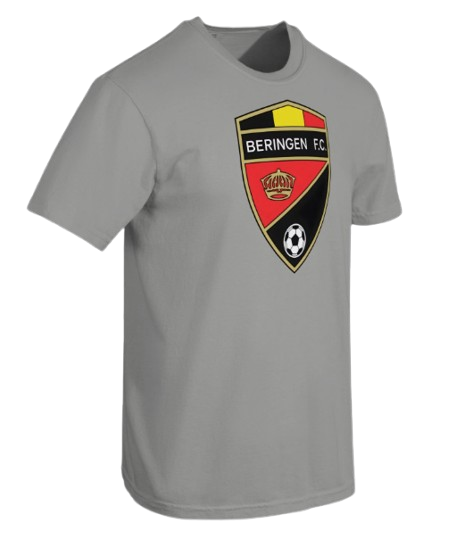
The story of Beringen FC is now captured in this exclusive Cultured Football shirt. Featuring its original badge and a brief history, if you enjoyed their story you can now own a piece of football’s forgotten past.
Really enjoyed this one
You really are doing a remarkable job with this project and I am proud to be buying every shirt.