


Go through the list of clubs that took part in the first European Cup and you might be surprised by how many familiar names are missing. There was no Barcelona, Manchester United, Inter or Bayern Munich; almost none of the clubs that are regulars these days were there.
In their place there was a different cast of clubs; unheralded ones like Servette, Rot-Weiss Essen and Saarbrucken. Reims, another of those which today would be considered a lesser light, famously made it all the way to the final.
All of which is hardly surprising. The competition was the brainchild of French sports newspaper L’Equipe, whose journalists wanted to settle the increasingly common arguments about which club side was the strongest in Europe. To do so they sent out invites to those considered as being among the continent’s most prestigious sides, taking care to include as many of the more reputable countries as possible. Ultimately, they had to make do with those who replied.
With that in mind, England, as the birthplace of the modern game, was obviously high on their list, with Chelsea the club they chose to approach. The London side had just won the English league for the first time in their history and initially they were quite interested in taking part. Indeed, their involvement had progressed beyond simply accepting an invitation, as a pairing with Swedish champions Djurgarden had already been lined up whilst representatives of the two clubs had met to discuss when their games should be played.
Yet not everyone in England shared Chelsea’s enthusiasm for the new competition. Most notably, Football League secretary Alan Hardaker was strongly opposed; seeing little need for English clubs to prove themselves against teams from the continent and worried about the additional demands European matches would place on the domestic calendar.
Eventually it was his view that prevailed and Chelsea withdrew.
Naturally, this created a problem as the organisers didn’t have a list of clubs on standby that they could turn to. Instead, they had to re-start the process and reach out to clubs from countries which originally had not been considered.
Three possible opponents eventually emerged. One was Stade Dudelange, champions of Luxembourg. Another was Spartak Praha Sokolovo, the club now known as Sparta Prague.
The third was Polish side Gwardia Warszawa and the choice ultimately fell on them.
Again this selection was unusual. Gwardia were not Polish champions as the title had been won by Polonia Bytom who, however, were struggling badly when the list of candidates was being drawn up. Instead, Gwardia had won the Polish Cup and were among the leading sides in the league when discussions over participation were taking place, having just beaten the reigning champions 7-1.
That result had a huge bearing on the pick but there were practical considerations too as Warsaw was easier for the Swedes to reach, with a direct flight available from Stockholm. Over the years it has also been rumoured that there may have been political considerations behind the Polish authorities putting forward Gwardia, a club closely associated with the country’s security services.
Whatever combination of sporting, political and logistical factors came into play, Djurgarden opted for the Warsaw club.
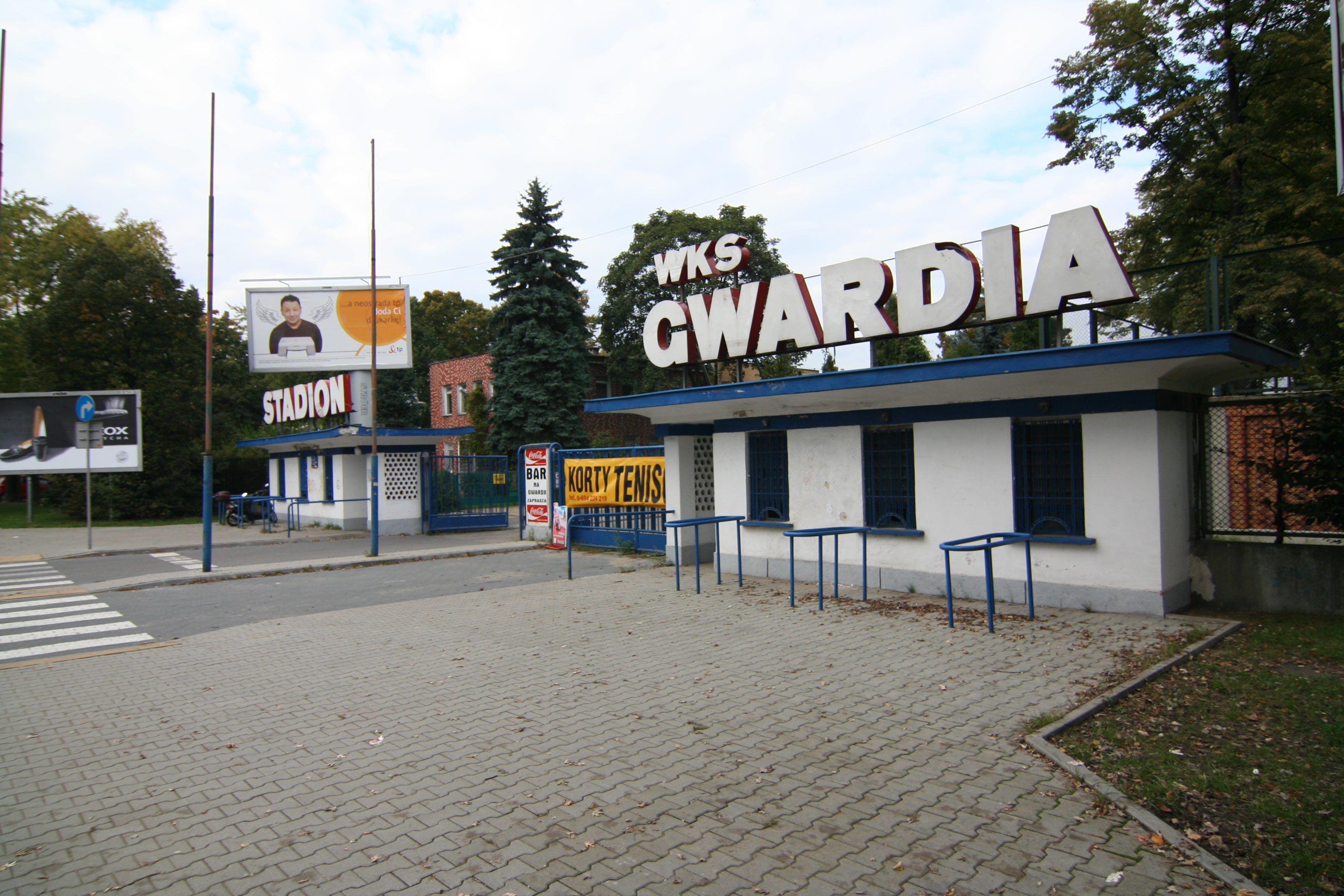
And so on 20 September 1955, the latter became the first Polish club to play in a European competition.
Gwardia Warsaw had officially been set up in 1948, although their origins stretched back to the immediate aftermath of the Second World War.
The club grew out of Milicyjny Klub Sportowy, a Warsaw side established in 1944 and associated with the Polish militia. In March 1948, this connection was formalised with the creation of Zrzeszenie Sportowe Gwardia.
This was part of the wider reorganisation of Polish sport taking place under the country’s new communist authorities. Rather than clubs developing purely as independent sporting institutions, many were brought under organisations representing particular branches of the state and economy. Gwardia became the sporting organisation associated with the security services, just as similar structures were being established elsewhere across the Eastern Bloc.
Officially, Gwardia existed to provide and promote sports and physical activity among employees of the public security services and their families. Indeed, the new club featured various sports apart from football; boxing, judo, athletics and taekwondo sections were also incorporated.
Reality, however, was not that simple and the club existed to serve and promote the organisation it represented, a relationship that defined the club’s identity whilst simultaneously providing resources and influence.
No club could expect to exist, let alone succeed, without such backing. Tellingly, representing Gwardia came with numerous material benefits, including a regular salary after retiring from the sport, food rations, and clothing parcels from the United States, which were of great value in those early postwar years.
Boosted in this manner, Gwardia were promoted to the Ekstraklasa in 1953 and immediately established themselves as title challengers. One year after that promotion they defeated Wisła Kraków 3-1 to win the cup, the success which inadvertently opened the doors to Europe.
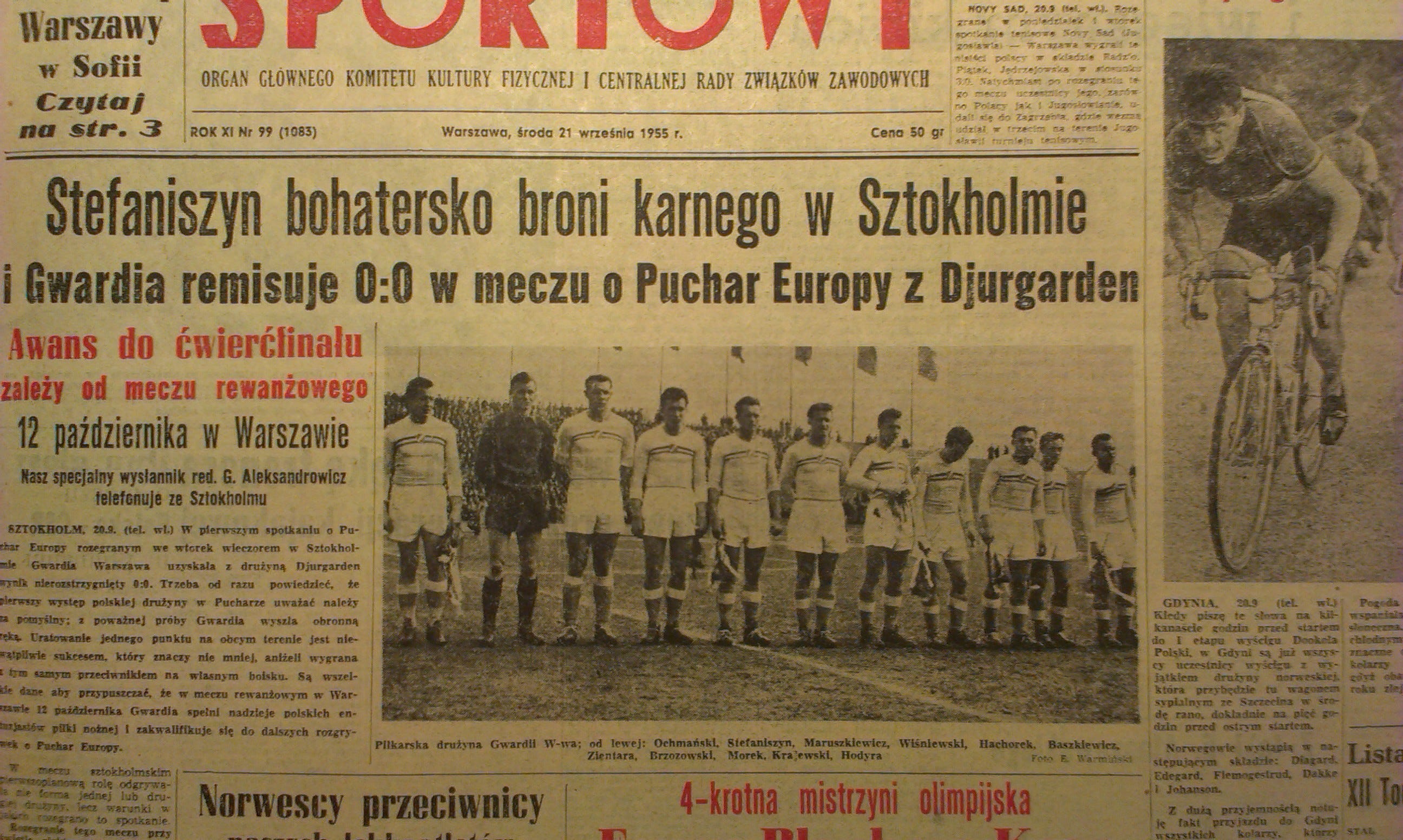
Whilst there were doubts over the reason why they had been picked for this honour, there was genuine talent throughout Edward Brzozowski’s team where goalkeeper Tomasz Stefaniszyn was a Polish international, as was midfielder Edmund Zientara, while further forward Stanisław Hachorek and Krzysztof Baszkiewicz provided much of the attacking threat.
Still the Swedish champions presented a formidable challenge. Their team included a number of internationals, among them Sigge Parling, Gösta Sandberg and goalkeeper Arne Arvidsson. Perhaps the most intriguing figure was Sven “Tumba” Johansson, a gifted footballer who would become considerably more famous as one of Sweden’s greatest ice hockey players.
Each week on Cultured Football we pick the five great football stories from the previous seven days.
Gwardia’s preparations suffered a significant setback when Hachorek was ruled out through injury but a solution was quickly found when Marian Norkowski, a striker belonging to Gwardia Bydgoszcz, was drafted into the Warsaw side specifically for the trip to Sweden.
If Norkowski was lucky to have made the trip, others were not. Coach Brzozowski had overseen Gwardia’s rise and had previously won the Polish championship with Polonia Warszawa. Yet when his team travelled to Sweden, he was not with them: the authorities refused to issue him with a passport.
Brzozowski had a reputation as an independent character and apparently was not considered sufficiently reliable to represent the country abroad. So while the system could help Gwardia secure players, resources and opportunities, even the coach of one of its favoured clubs remained subject to the political restrictions of communist Poland. Tadeusz Foryś took charge of the team instead.
The match was played under floodlights, something Polish players had little experience of at the time. Indeed players would subsequently talk of the difficulties they had in following the ball beneath the artificial lighting, even suggesting that its shadow caused problems when they attempted to control it.
Djurgården attempted to exploit their physical advantage with high balls towards their forwards, while Gwardia hoped that their greater speed would cause problems. That plan suffered an early blow when Baszkiewicz was injured.
Substitutions were not yet permitted, meaning that one of Gwardia’s principal attacking threats had little choice but to remain on the pitch despite being unable to contribute properly.
Still, the Poles survived. Djurgården were awarded a penalty shortly before half-time, only for Stefaniszyn to save Parling’s attempt and Gwardia held out for a 0-0 draw, returning to Warsaw with what appeared to be an excellent opportunity to reach the next round.
The Polish press was encouraged; the Swedes were rather less impressed: Swedish newspaper Idrottsbladet confidently suggested that Djurgården’s real performance was still to come.
It proved remarkably prescient.
Gwardia’s preparations for the return were once more hardly ideal. Rather than remaining at home, they travelled to Yugoslavia for matches against Vojvodina Novi Sad and Red Star Belgrade, ostensibly to sharpen themselves for the European tie (incidentally, they lost both games).
Djurgården took a different approach. They chartered a plane to Warsaw and settled into the Bristol Hotel before the match.
This time Brzozowski was at least permitted to take his place on the Gwardia bench. It made little difference.
Before the Warsaw crowd had been given much opportunity to settle, Hans Eriksson put Djurgården ahead after just five minutes. Baszkiewicz quickly equalised and for a moment Gwardia believed they could actually win out. Yet it was not to be.
Eriksson scored again in the 17th minute and completed his hat-trick five minutes later. Gösta Sandberg added another before half an hour had been played.
With Djurgården 4-1 ahead by half-time, Gwardia’s European adventure was effectively over.
Perhaps the most revealing reaction came from Przegląd Sportowy. Journalist Jerzy Zmarzlik admitted that, having watched the return game, he struggled to understand how Gwardia had managed to draw in Stockholm. Based on what he had just seen, he wrote, it might appear that Polish football was still “in its infancy”.
Yet, painful as the result and that assessment must have been, it did not signal the end of Gwardia’s ambitions. If anything, their best opportunity to establish themselves among Poland’s elite was still to come.
Two years later they returned to the European Cup, once again without having won the Polish title. This time there was considerably less doubt about their sporting credentials. Gwardia had developed into one of the best teams in the country and spent much of the 1957 season challenging for the championship.
For a while, it looked as though they might actually win it. They led the table for much of the campaign and at one stage held a five-point advantage, a significant margin at a time when only two points were awarded for a victory. Their challenge faltered badly towards the end, however, allowing Górnik Zabrze to overtake them and leaving Gwardia as runners-up.
It would prove to be the highest league finish in the club’s history.
Their second European adventure was considerably more dramatic than their first. Drawn against East German champions Wismut Karl-Marx-Stadt, Gwardia won the first leg 3-1 in Warsaw before losing the return by the same score.
There was no away-goals rule and penalties were not yet used to settle European ties, so a third match was required on neutral ground in Berlin. Even that failed to separate them, the teams drawing 1-1 after extra time.
What followed is unimaginable today.
With no further sporting means available to determine who should advance, the tie was decided by drawing lots. Wismut won and Gwardia were eliminated without actually having lost the deciding match.
It was another near miss for a club that seemed permanently destined to brush against major achievements without quite claiming them.
Indeed, the momentum of those early years began to fade. Gwardia were relegated from the top flight in 1960 and thereafter spent much of the following decade moving between the first and second divisions.
That inconsistency did not mean that the club had ceased to matter. Its institutional backing remained and the wider Gwardia organisation continued to produce elite sportsmen, particularly in boxing and judo. Yet in football, the emergence of Górnik Zabrze as the dominant force in Poland and the continued strength of clubs such as Legia Warszawa, Ruch Chorzów and later Stal Mielec meant that Gwardia were increasingly pushed away from the centre of the game.
By the end of the 1960s, however, another good side was beginning to emerge.
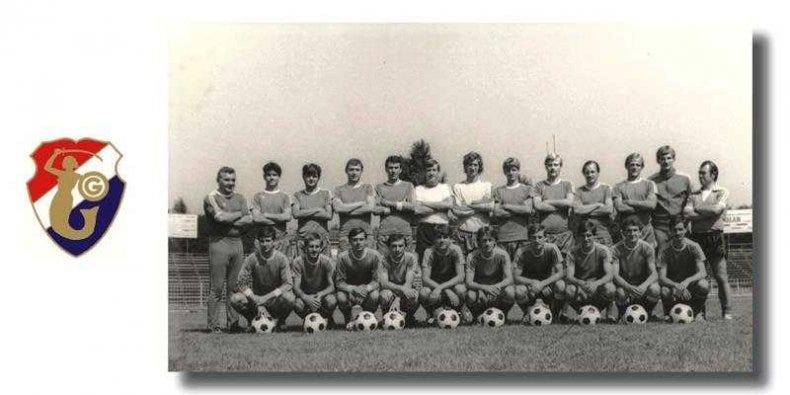
Promotion in 1969 was followed by six consecutive seasons in the top division, culminating in 1972-73 when Gwardia finished third behind champions Stal Mielec and Ruch Chorzów. Significantly for a club increasingly overshadowed within its own city, they finished four points ahead of Legia.
It was undoubtedly Gwardia’s finest period since the 1950s.
Once again, there was considerable talent in the side. Defender Jerzy Kraska had been part of the Polish team that won Olympic gold in Munich in 1972, while Ryszard Szymczak was another international and had finished as the Polish league’s leading scorer earlier in his career. Stanisław Terlecki, one of the most gifted and individualistic players Polish football would produce during the following decade, also emerged at the club.
Finishing third brought Gwardia back into Europe for the 1973-74 UEFA Cup and this time they managed something their pioneering predecessors had failed to do: win a European tie.
Their opponents were Ferencváros, one of the biggest clubs in Eastern European football. Gwardia won 1-0 in Budapest through a Szymczak goal and then beat the Hungarians 2-1 in Warsaw.
The reward was a meeting with Feyenoord.
Even in defeat, Gwardia gave an indication of their quality. They led in Rotterdam before eventually losing 3-1, then won the return in Warsaw 1-0 thanks to another Szymczak goal. It was not enough to overturn the deficit, but there was consolation in what happened afterwards: Feyenoord went on to win the UEFA Cup.
The following season brought another opportunity for silverware. Gwardia reached the 1974 Polish Cup final, where they faced newly crowned champions Ruch Chorzów. A victory would have delivered their first major trophy in twenty years but two Joachim Marx goals shortly after half-time settled the game, Ruch winning 2-0 to complete a league and cup double.
Yet because Ruch were champions and therefore entered the European Cup, Gwardia inherited Poland’s place in the Cup Winners’ Cup.
Their opponents were Bologna.
A 2-1 victory in Warsaw raised hopes of another notable European result, but a 2-0 defeat in Italy brought elimination.
There was no disgrace in their performance but the same could not be said of their domestic season. In 1978, the team which had finished third only two years earlier, was relegated.
They would return to the top division, but increasingly their stints there were temporary ones. Gwardia ceased to be a club competing for honours and instead became one fighting purely to retain its status.
There was one last flicker at the beginning of the 1980s.
A young generation contained some exceptional footballers, most notably Dariusz Dziekanowski. He had crossed Warsaw from Polonia as a teenager and quickly established himself as one of the country’s brightest attacking talents. Alongside players such as Marek Banaszkiewicz and Krzysztof Baran, he helped Gwardia win promotion back to the top flight in 1981.
Dziekanowski soon became a full Polish international. Another young defender emerging at Gwardia, Dariusz Wdowczyk, would also go on to play for Poland and later for Celtic.
For all the talent that these players brought, they couldn’t return the club to its former heights. In 1983 Gwardia were relegated again and, this time, there would be no return. Dziekanowski was sold to Widzew Łódź for 21 million złoty, at the time an extraordinary transfer fee in Polish football, while Wdowczyk moved across the city to Legia.
Those departures were symbolic, highlighting how Gwardia could still produce players capable of succeeding at the highest level but the club itself could not aim to do likewise.
For a while it remained a respectable second-tier side. Gwardia spent much of the remainder of the 1980s in the second division and was still playing there as late as 1992.
Then came a much more fundamental problem, with the political system that had created Gwardia beginning to disintegrate.
Communism had provided the club with considerable advantages. Its association with the security services had helped supply facilities, employment, funding and institutional protection. In the new Poland that relationship no longer carried the same value.
Indeed, it eventually became a liability.
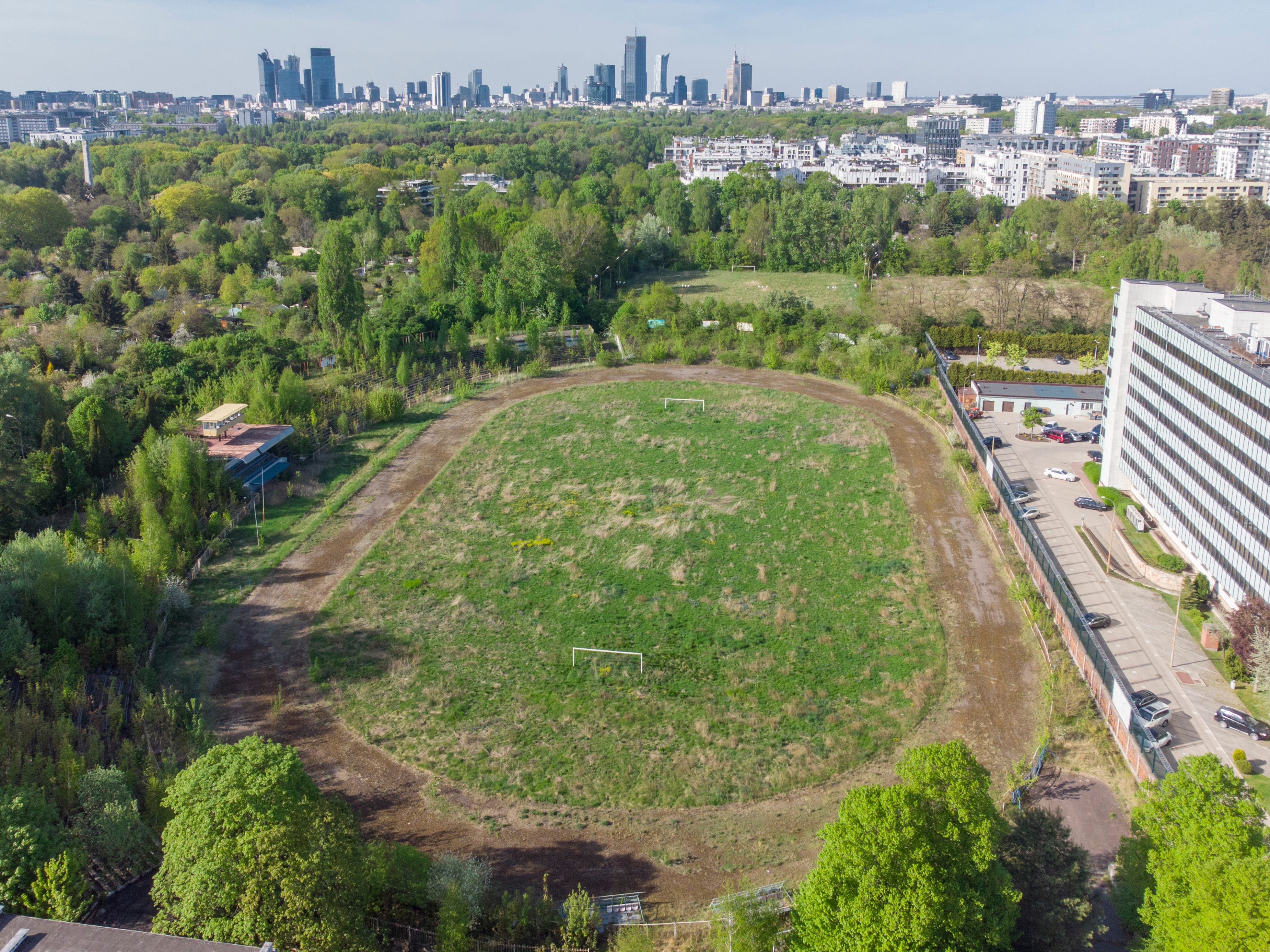
Nowhere was that more obvious than at Gwardia’s home on Racławicka Street. The club had used the large sporting complex there since the 1950s. Over the years it had grown into far more than a football ground, incorporating training pitches, sports halls, tennis courts and other facilities used by the numerous sections operating under the Gwardia name.
That Gwardia did not own it was a problem which had mattered little under communism. As long as the club and the institutions controlling the land effectively belonged to different branches of the same state system, the distinction was largely academic. That changed drastically once that system disappeared. They were still allowed to use the premises but as tenants.
The football team’s decline accelerated. By the beginning of the twenty-first century Gwardia had slipped far down the Polish pyramid and in 2005 it dropped out of the third tier.
The Racławicka complex, meanwhile, was deteriorating.
In 2007 control of the property passed to the national police headquarters. The organisation which had effectively created Gwardia almost sixty years earlier was now on the other side of an increasingly bitter property dispute.
A proposed monthly rent running into hundreds of thousands of złoty was completely unrealistic for a club operating in the lower reaches of Polish football. Gwardia accumulated debts while its ageing facilities continued to deteriorate.
There were increasingly desperate attempts to generate money. The stadium that had once staged European football was repurposed for major concerts, with artists including Tina Turner, Metallica, Aerosmith and Iron Maiden performing there.
It still wasn’t enough.
By 2013 the condition of parts of the Racławicka complex had become so poor that the building inspector prohibited their use. Training facilities were closed and utilities were cut off. Other sporting sections were affected too, leaving athletes at a club that had produced Olympic champions struggling to find somewhere suitable to train.
For the football team, already competing far below the professional game, the damage was terminal and in 2018 Gwardia’s football section was dissolved.
It was a remarkably quiet ending for a club that occupied a unique place in Polish football history.
Today, the name Gwardia Warszawa survives through other sports, but its football team does not.Beringen FC had ceased to exist.
Honours Won:
Polish Cup winners: 1954
Polish First Division runners-up: 1957
Polish First Division third place: 1959, 1972-73
Polish Second Division champions: 1966-67, 1977-78, 1980-81
Polish Cup runners-up: 1974
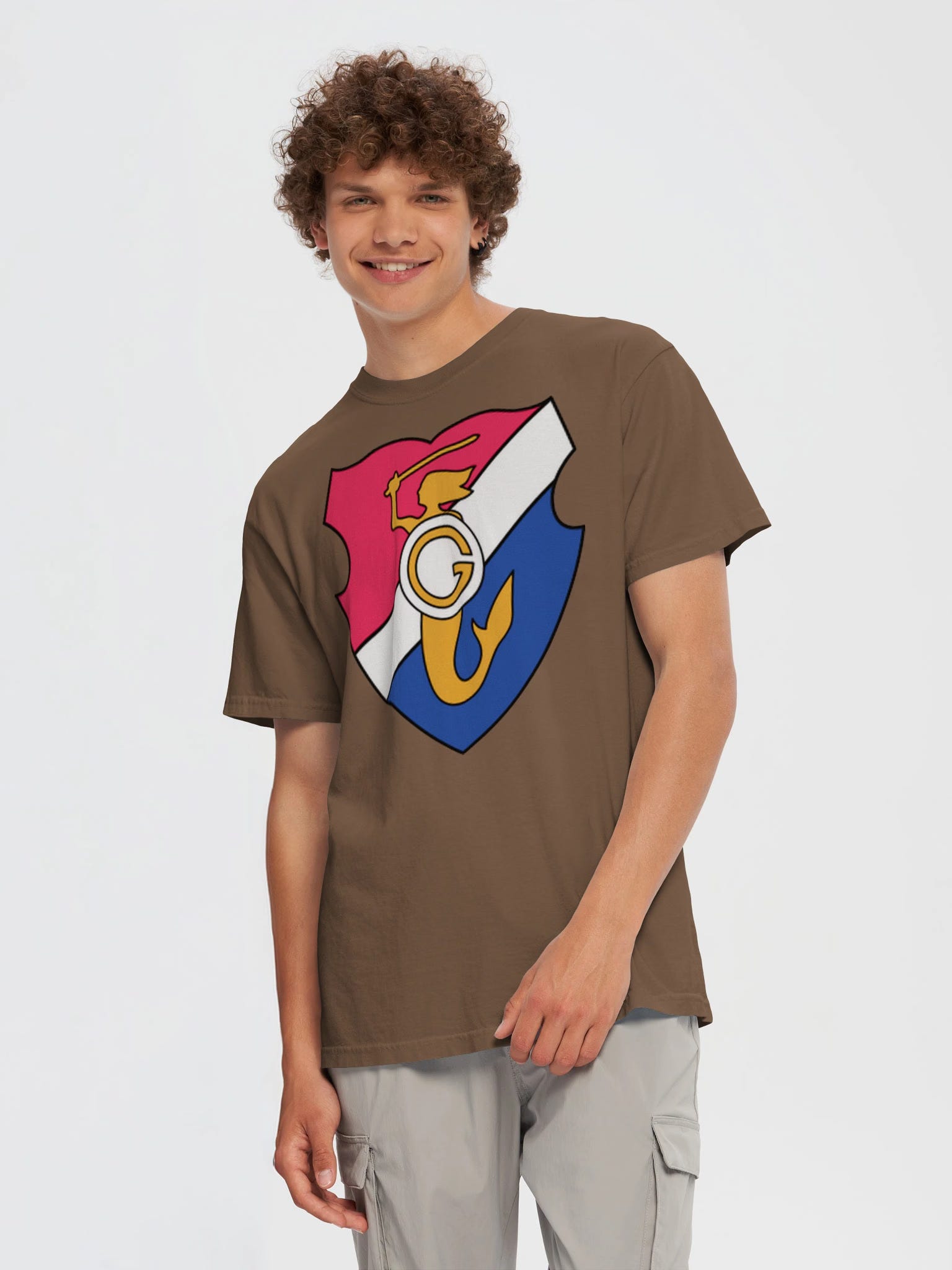
The story of Gwardia Warszawa is now captured in this exclusive Cultured Football shirt. Featuring its original badge and a brief history, if you enjoyed their story you can now own a piece of football’s forgotten past.
Great story. Just a little typo about Beringen FC left over at the end (or was it a test to check who reads to story to the end? :D)